
How Ailytics and Exyte are making AI-powered safety monitoring work where it's needed most — on construction sites with unreliable connectivity, harsh conditions, and zero margin for delay.
Ailytics was founded in 2021 by Lenard Tan Wei Zhuang and Prateek Manocha as a spin-off from the National University of Singapore (NUS). We tap into existing camera systems to provide real-time AI safety and operations intelligence — helping heavy industries across construction, ports, and airports eliminate risk, ensure compliance, and optimise productivity.
Through BEAMP, we have worked with multiple industry partners across different challenge statements to validate and refine AI solutions in live operating environments. Each project has deepened our understanding of what it takes to deploy reliably in real-world conditions — and this time, the challenge was about making it all work at the edge.
When the Camera Sees, but the Network Can't Keep Up
Exyte is a global leader in the design, engineering, and delivery of ultra-clean and sustainable facilities for high-tech industries, serving clients across semiconductors, battery cells, pharmaceuticals, biotechnology, and data centres.
On their construction sites, AI video analytics depends on clear and consistent footage to perform effectively. But site conditions — unstable connectivity, limited bandwidth, harsh environments — make it difficult and costly to transmit video reliably. When footage is compressed or frames are dropped, AI model performance degrades and safety alert accuracy suffers.
The question was whether AI processing could be moved closer to the cameras, removing the dependency on stable network connections altogether.
Shrinking the AI to Fit the Site
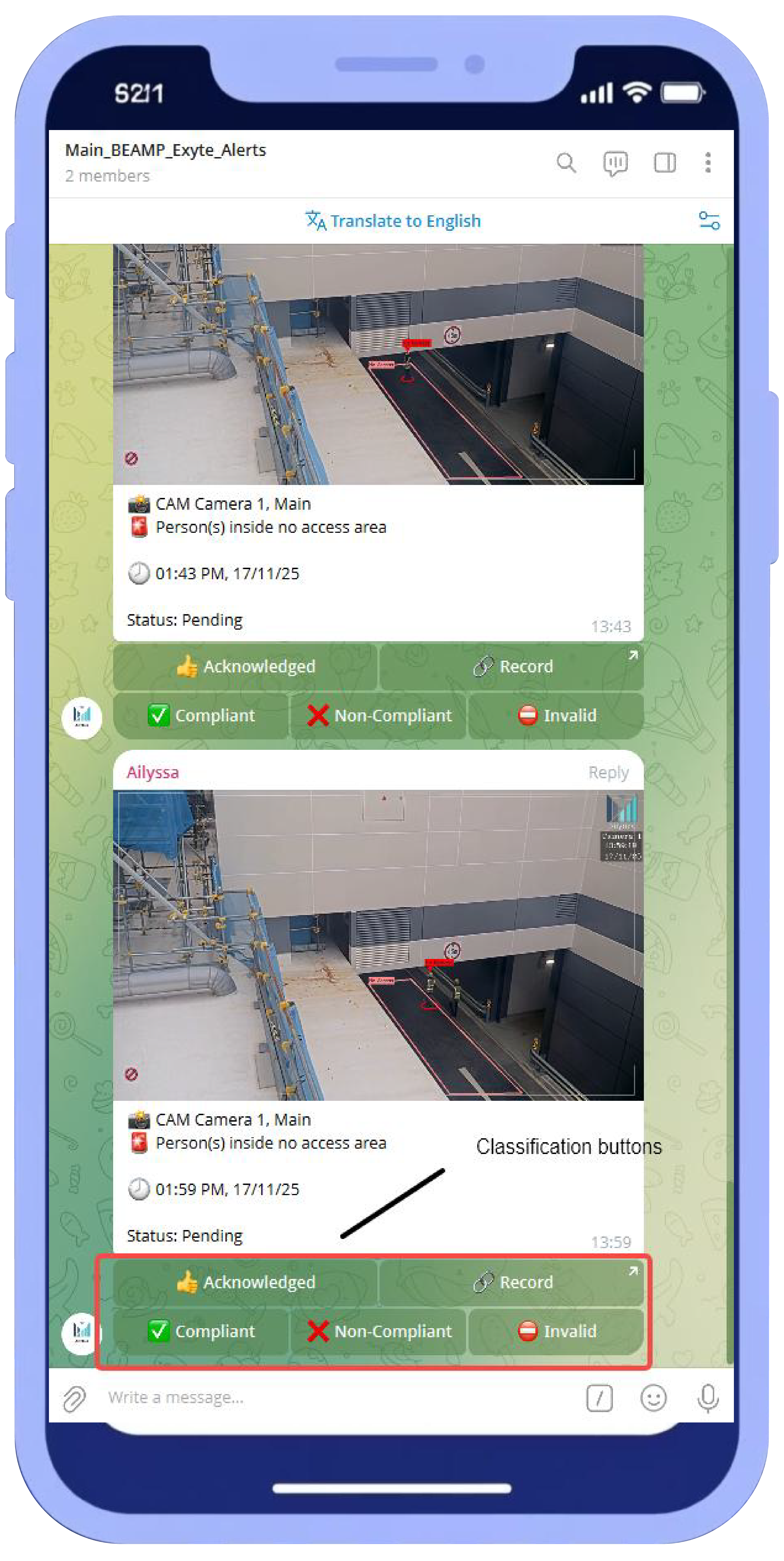
Our approach was to shift AI video analytics from a cloud-dependent model to an edge-based architecture. Instead of streaming footage to a remote server, all video processing and AI analysis runs entirely on a compact edge device deployed near the cameras. Only alerts and metadata are transmitted — not full video streams.
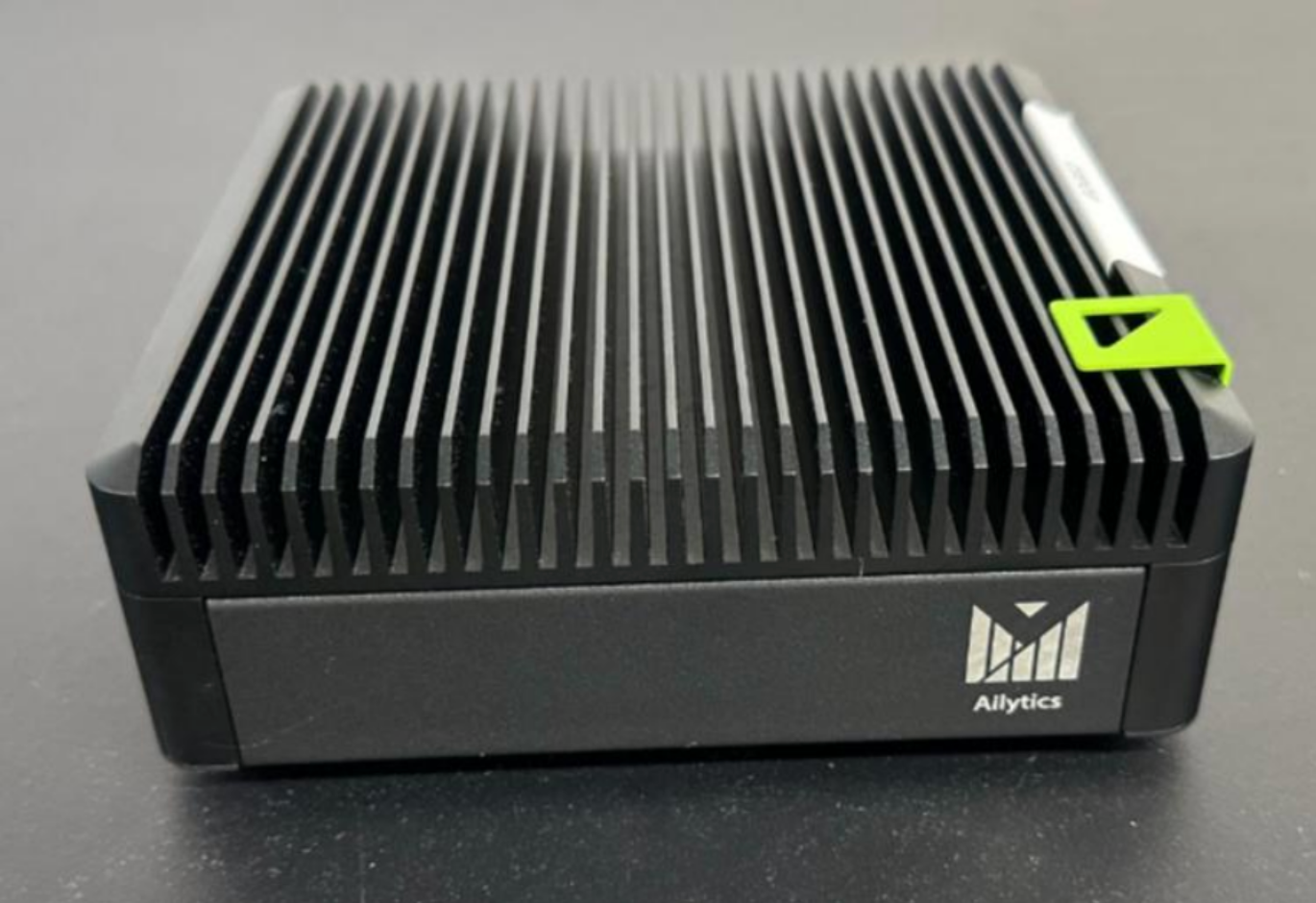
What makes this stand out is the form factor. We compressed complex AI models and business logic into a small device that can operate reliably in the heat of an outdoor construction site, without the large water-cooled systems that existing solutions typically require. The device performs continuously with low latency, even without an internet connection for analysis.
For Exyte, this meant faster, more accurate safety alerts with significantly reduced bandwidth usage and cost. Processing runs on full-quality local footage rather than degraded streams, improving both reliability and consistency.
Testing Where It Counts
Construction sites are unpredictable — connectivity fluctuates, lighting shifts, weather changes, and site layouts vary. The BEAMP programme gave us the chance to stress-test the device in an actual working environment, which is exactly what a solution like this needs before it can scale.
Exyte's team was closely involved throughout — not just the innovation team that oversees the challenge statement, but also the on-site safety team who would ultimately be using the solution day-to-day.
Having both perspectives at the table, including during the final demo, helped us evaluate whether the solution could integrate into existing site workflows without adding complexity for the people who need it most.
What’s Next
Exyte's near-term focus is on further testing and validation across different construction environments, ensuring the device is robust and reliable before wider deployment. The long-term goal is to support rollout across more sites, with the solution practical, stable, and scalable enough for everyday construction operations.
On our end, we have already deployed seven units across projects both locally and overseas, handling a fraction of our current use cases. The plan is to expand support across all our use cases and continue testing the device in varied environments, from extreme temperatures to power interruptions, before offering it more broadly.
Looking further ahead, we may also begin packaging large vision model capabilities into the device for contextual video reasoning.
The BEAMP Difference
Participating in BEAMP gave us the opportunity to work directly with end users, gaining insights and feedback that are difficult to replicate in a lab. The ability to stress-test our device in a real working environment, with all the unpredictability that comes with it, has been invaluable.
For Exyte, the programme's focus on real-world deployment was the key draw. Moving beyond a controlled prototype environment and evaluating whether a solution is truly robust, practical, and scalable for industry use — that is what BEAMP is built for.
Lenard Tan Wei Zhuang
CEO, Ailytics
